Add items to your Hire List to send to our team for pricing. We respond to enquiries within one working day.
ETC_Eos-Apex-Processor_1ETC_Eos-Apex-Processor_1

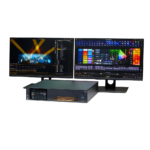
ETC – Eos Apex Processor

ETC


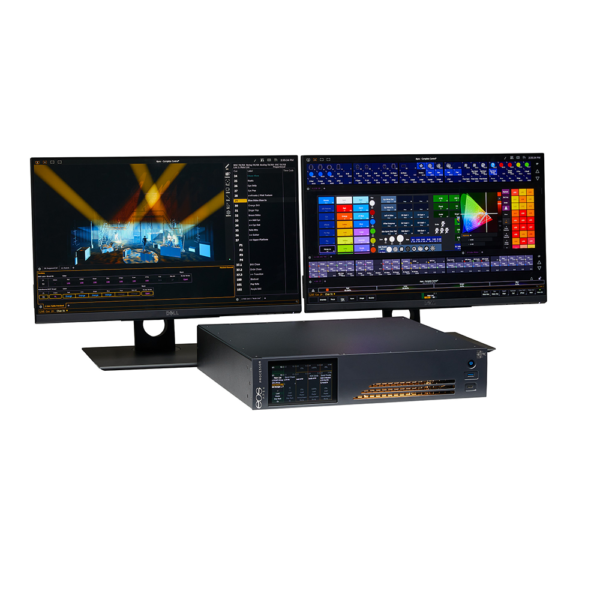
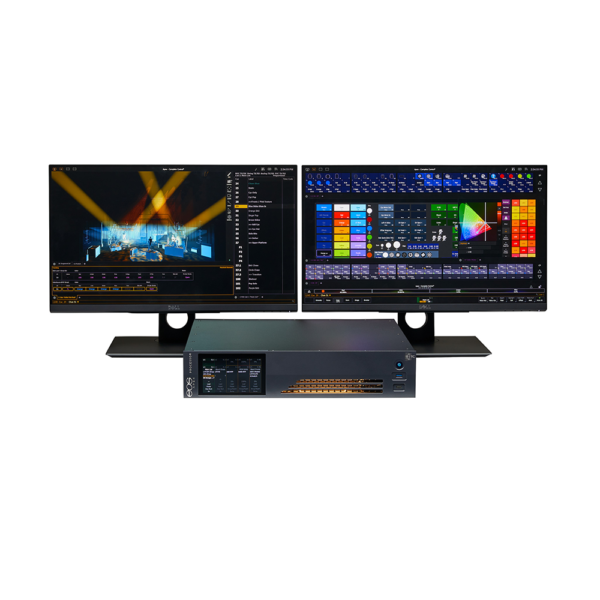
The Eos Apex Processor carries the same power as Apex consoles, in a 2U 19-inch rack mount unit.

Description

The Eos Apex Processor carries the same power as Apex consoles, in a 2U 19-inch rack mount unit. It includes the same one- and ten-gigabit Ethernet connections as Apex consoles, making it a great choice to drive a high-powered rig on its own, or serve as a backup to keep large systems running safely. You can even monitor and interact with your system using the built-in haptic touchscreen. Or make the Eos Apex Processor into a workstation by adding USB-connectable devices – including touchscreens, Eos Fader Wings, and the Eos Programming Wing.

Features

  • Approachable yet powerful syntax for programmers of every level
  • Industry-leading color control tools
  • Magic Sheets for custom programming and displays
  • Augment3d 3D programming and visualization environment
  • Virtual Media Server function for pixel-mapping
  • Timecode and automation integration
  • Multi-user and multi-programmer working environment

Additional information

Hardware and Interfaces

2U 19-inch rack-mount form factor
One 5-inch high-resolution front panel display, with multi-touch and haptic touch feedback
Supports three external display port monitors (1920×1080 minimum, 3840×2160 maximum), with optional single-touch or multi-touch screen control and DDC/CI support
One dimmable warm-white LED accent light
Solid-state hard drive
Dedicated graphics processing
IEC power input (100–240 VAC at 50/60 Hz), fused mains power switch, locking regionalized power cable included
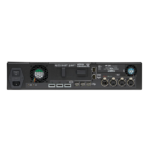
Four individually configurable Gigabit Ethernet ports, etherCON connectors, PoE++ (802.3bt compliant PSE)
Two individually configurable 10-Gigabit SFP+ ports, which accept modules for copper, single-mode fiber, or multi-mode fiber connections
sACN and Art-Net network output protocols
USB 3.1 ports, for flash drives, pointing devices, keyboards (4 USB-A ports, 4 USB-C ports)
One Kensington lock port
Multiple MIDI and/or SMPTE timecode inputs, MIDI In and Out, Analog/Serial Inputs, OSC transmit/receive, UDP transmit/receive through network interface or Response Gateways

Downloads

Data Sheet Download